
Oral healthcare expenditure is no exemption to rising health care costs in the United States. The economic costs for dental services has grown exponentially over the years. According to the American Dental Association Health Policy institute (2017) report, dental care expenses rose 3.3 percent from 2015; $124,373 is the current national average spent annually in the United States. In addition to this steep trajectory, increasing numbers of uninsured individuals and out of pocket costs make oral healthcare screening and treatment unattainable for many (Shetty, Yamamoto, & Yale, 2018). Therefore, innovative changes delivered through technology are needed to improve dental services and delivery in the twenty-first century.

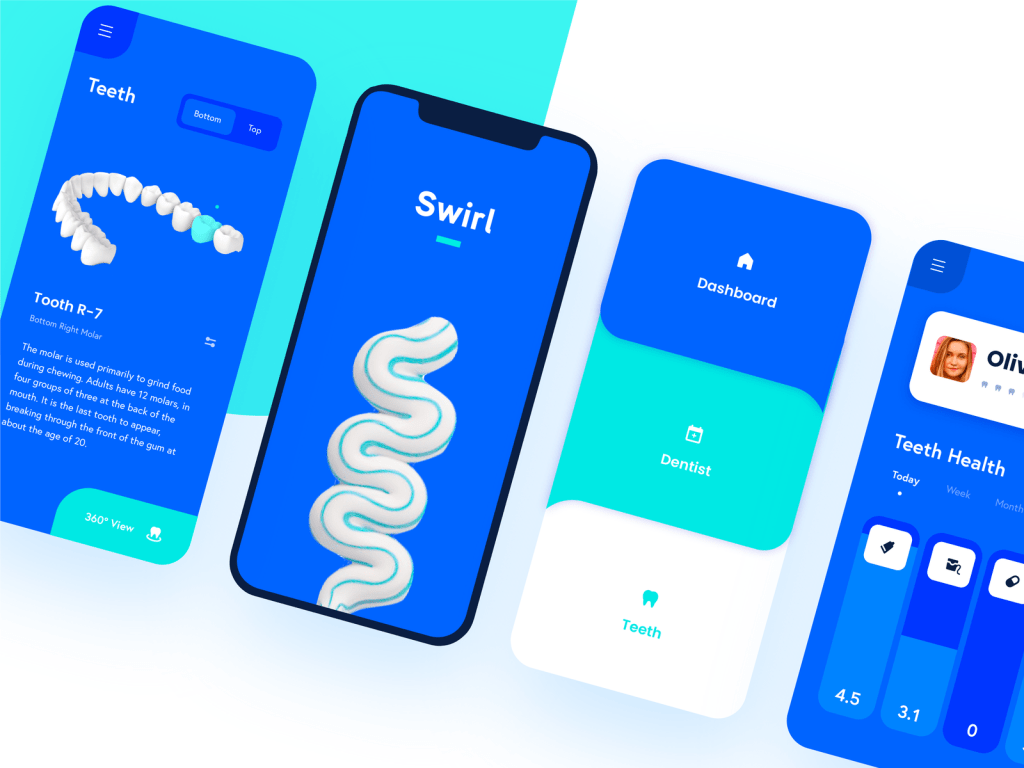
As previously discussed, teledentistry is a plausible option in bridging the gap for dental care access. However, advancements in promoting behavior modification should be considered to increase dental health prevention because access to dental services is a barrier even with teledentistry. Digital technology has become ubiquitous throughout our daily lives and can be used to optimize health care delivery models. Oral health disease is strongly linked to inadequate oral hygiene; 59% of women miss daily brushing (Shetty, Yamamoto, & Yale, 2018). Mobile health applications can influence health behaviors such as daily oral hygiene. These applications can monitor tooth brushing efficiency through mobile apps and provide custom feedback (Shetty, Yamamoto, & Yale, 2018). This information is uploaded to a privacy data compliant cloud server that dental providers may review with patients upon their next visit. Even in circumstances where a dental visit is not feasible, patients may still review their own progress and make behavior modifications as needed.
Dental insurers must also adapt to innovative dental health advancements. According to Shetty, Yamamoto, and Yale (2018), insurance companies and payers should provide incentives to participate in digital dentistry. Beam, is an example of a dental PPO plan that embraces evolution in digital dentistry. Members under Beam receive a six month auto subscription for a smart toothbrush, refill heads, and dental floss. The smart toothbrush tracks time and efficiency of an individual’s oral hygiene routine that syncs to the company’s app which is then analyzed to set dental premiums. Therefore, better oral hygiene practices can mean lower insurance costs.
Innovative ideas such as this are changing the context of oral healthcare delivery. This can overall improve oral health for everyone and in particular, pregnant women. Preventative measures may be the only feasible way pregnant women can take control of their oral health when they face large barriers in access to services and are often refused services by dental providers due to stigmatization.
References
American Dental Association. (2017). HPI report shows dental spending increased again in 2016. Retrieved from https://www.ada.org/en/publications/ada-news/2017-archive/december/hpi-report-shows-dental-spending-increased-again-in-2016
Beam Dental. (2018, September 24). Beam promo video loop [Video]. https://www.youtube.com/watch?v=UHJq8aLRlDE
Shetty, V., Yamamoto, J., & Kenneth, Y. (2018). Re-architecting oral healthcare for the 21st century. Journal of Dentistry, 74(Supp1), S10-S14. doi: 10.1016/j.jdent.2018.04.017
 Oral Health Care Screening in Pregnancy
Wow! Your blog was eye-opening. In the primary care setting, many times we do not address dental health. After reading your post, I plan to incorporate these things into my daily practice. I was very surprised that “59% of women miss daily brushing”. As primary care providers, I feel that we can influence these habits with very brief education during usual visits. I also never would have considered telehealth dental services, but your post opened my eyes to these possibilities and their potential impact on our communities.
Shetty, V., Yamamoto, J., & Kenneth, Y. (2018). Re-architecting oral healthcare for the 21st century. Journal of Dentistry, 74(Supp1), S10-S14. doi: 10.1016/j.jdent.2018.04.017
LikeLike
Hello,
Thank you very much for enlightening me with your blog. You are addressing oral care in pregnancy, a very important health issue, which is usually being overlooked by many providers. When I was pregnant, my first OB never mentioned about oral care to me and not once she recommended me to visit my dentist. I then switched to a different OB due to a change of insurance and found out oral care is critical in pregnancy. It is very eye-opening to know that there are many innovative ideas in changing how oral healthcare delivers. Tele-dentistry is such a great technology innovation. I’m very impressed with the existence of mobile health applications to monitor clients’ tooth brushing and provide feedback. However, using mobile applications (apps) can put users’ privacy at risk (CISA, 2019). When downloading an app, it may ask for permission to access personal information (CISA,2019). To secure data on mobile devices, it is recommended to limit activities on public Wi-Fi networks, be cautious when charging, protect device from theft, and protect data by ensuring the device is password protected (CISA, 2019).
References
CISA, 2019. Secure Tip (ST-19-003): Privacy and mobile device apps. Retrieved from https://www.us-cert.gov/ncas/tips/st19-003
LikeLike